Skip to Content

Elevator Speech or Elevator Questions?


Sometimes a new client is just a push of a button and a few questions away.

Sometimes a new client is just a push of a button and a few questions away.


Many business development experts urge you to create an elevator speech of 30 to 60 seconds so you can tell anyone in a short trip that can elevate your business by adding your fellow passenger to your client roster http://www.creativekeys.net/PowerfulPresentations/article1024.html

http://www.quintcareers.com/elevator_speech_dos-donts.html


Once you’ve created an elevator speech, I suggest you create elevator questions.  I believe you can get more clients by asking provocative questions than lecturing someone on what he should do.  People are told what to do by bosses, spouses, commercials all day long.  When a person asks what you do, tell him, and if he shows interest, instead of telling him that he should get massaged, ask him, “Do you have pain in your body?”  When he says yes, which he will because–if he’s an adult in the 21st century who commutes in bumper-to-bumper traffic, or is bumped around by straphangers in urban subways and railroad cars, or has a boss, a spouse, or a kid–he has pain in his body. Then ask, “Would you like to be free of pain in your body?”


If you ask him where the pain is, he’ll tell you.  The next step is to ask if he’d like to book a session to relieve that pain.  Of course, he would, although he may say that he needs to think about it.  Let him.  Give him your business card, then ask another two questions: namely for his card, and for permission to call within a week if he fails to call you.  Why?  So you can direct the matter instead of being reactive.  Then call seven days later if he forgets.  When you remind him who you are and how you met, ask him again if he’d like to be free of the specific pain that he mentioned.   As  Hamlet said, “That’s the question.”

Massage for Creativity

The 9 Muses

The Greek 9 Muses who inspire creativity

Massage enhances creativity.  There are no ifs, and, or buts about it.  The relaxation that occurs stimulates inspiration, because a relaxed mind and body are more receptive to creative impulses than when you’re tense.

While receiving an Indonesian massage on a luxury yacht off the coast of Thailand, I gained inspiration for this blog, as well as for one on tuning in to what your massage clients experience from your treatments.  During previous massages, I’ve received ideas for other blogs, for new workshops that I’d eventually give, and for new books and mini-books that I’d write.

If you’d like to have more creative people on your client roster, talk to existing clients who are in the creative arts and ask them for testimonial quotes about how your massages awaken their creativity, both during a session as well as after.  Then, create a brochure on massage and creativity, and target local creative people: actors, directors and theater companies; dancers, choreographers, and their companies; writers and writer groups; painters, sculptors, and art schools; musicians, orchestras, and music schools.

Once you’ve completed the brochure—and had it edited and proofread by another pair of eyes—snail mail it to the heads of these organizations.  Tell them that massage is a great boon to creative people, as the enclosed brochure indicates.  Describe your background, and let them know you work with many creative people.  Finally, indicate that you’ll follow up with a phone call in a week.  Make a note to do just that.  Then, get ready for some fascinating new clients.

Make a Date with your Database

The computer and database software are an LMT's friends.

The computer and database software are an LMT’s friends.

I’ve met countless massage therapists whose office files belong more in the 20th century than in the 21st.  I’m not suggesting that LMTs should have paperless offices.  I am suggesting, however, that electronic data be incorporated, as well.

Paper files for each session need no changing.  But as a business coach for massage therapists, I travel the country giving my CE workshop, “How to Build a $100,000 Massage Business,” and I’ve seen and heard about far too many intake forms that fail to ask for email addresses.  How can you communicate with clients by email if you don’t know their email address?  The answer is that you can’t.  And that’s a huge oversight.  I’ve also seen far too many LMTs who treat the computer as an enemy.  (I’ll save that topic for a future blog.)

So, go through your files and if you don’t have a client’s email address, pick up the phone—another invention that made people uncomfortable in the 19th century when it was brought into the world—and ask for it.  If you’re not asking for an email address, correct the oversight.

Once you’ve collected email addresses from clients it’s time to build a database.  That’s a slightly high tech way of saying a mailing list.  Except the mailing list I’m talking about is electronic.  The days of massage therapists mailing out paper will soon go the way of the Edsel.

Your computer has database software.  If you don’t know how to find it and/or are reluctant to learn it, find a friend, a client, a colleague or a teenager to do it for you.  If you can’t afford to actually pay them for it, trade for it.

What you’re building is a newsletter of your very own.  And that’s a subject for a future blog, as well.

Buy One Massage, get one Free


Virtually everyone is making buy one get one free offers.

Virtually everyone is making buy one get one free offers.

Restaurants, shoe stores, bookstores… it’s hard not to find a “Buy one, get one free” offer.   Oh, sure, you don’t see such ads for medical practices, auto dealers, and massage therapists. It’s understandable why MDs, ill at ease about advertising, aren’t running such specials.  But massage therapists?  There’s no good reason why they’re not.


For a few hundred dollars worth of advertising, a number of LMTs employing this strategy received ongoing clients—some of whom might be worth many thousands of dollars during the course of their relationships with these therapists.  To make this promotion successful require the new client to receive that free session within a week of the first.


Consider the advantages of the offer: 


1. New people experience your work for half the price they normally would, particularly appealing during a recession.  

2. New clients pay full price for their first massage from you, which is psychologically important for you.

3. New clients get two massages from you in two weeks.

4. The second massage is free.  Human nature being what it is, the tendency to feel obligated to the therapist might inspire the client to book a third massage.


The peaceful state that accompanies a massage is far more subtle than a sloppy Big Mac or an eventual sweaty pair of Nikes, each of which can also be purchased on a buy-one-get-one-free basis, so some LMTs might feel odd compared to such multinational giants.  But for a massage therapist to be associated with the two most prominent logos in marketing history can only be a good thing. 

How to Use Your Business Card Effectively

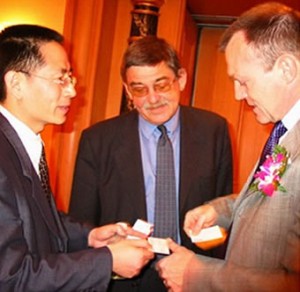
Business cards are for exchanging

Business cards are for exchanging

A business coach for massage therapists, I’m not going to tell you what to put on your business card.  Designers are far more capable with layout and graphics than I am.  I’m going to tell you how to use this card.

Let’s look at a typical place you give out this little piece of ID: a party.  You’ve given it out so often and nothing ever came of it.  You used it incorrectly.  Let’s look at a correct and enlightened use of that card.

Let’s say you’re talking to some guy at the guacamole dip.  You’ve talked about what you do and he expresses interest, so you automatically give him your card.  He now has a way to contact you–but you have no way of contacting him.  If you’re a woman in her mid-40s or older—you may remember a time before the advent of cell phones, pagers, and voicemail—when you may have sat beside the phone waiting for a certain guy on whom you had a crush to call. You felt the vulnerability of being reactive.  Now I’ll show you how to be proactive.

Change the adage “When in Rome, do as the Romans do.” to  “When in America, do as the Japanese do.”  They trade business cards.  A Japanese businessman expects to receive a card from whomever he’s giving his to.  Say to the guy at the guac dip, “As for cards, I love the civilized Japanese tradition: I give you my card and you give me yours.”

Then say, “Think about if you’d like to get relief from that pain in your (insert here whatever his pain is, he’s no doubt told you and probably even showed you), and if I haven’t heard from you within a week, I can make your life easier and give you a call.  Would you like that?”

Instead of being that disempowered teenager years back, you can be an empowered adult massage therapist and call him.  I’m not saying he’ll be your client if you call.  But if you don’t, he probably won’t.

If You Schedule it, He will Come

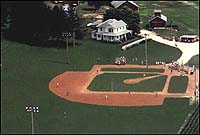
If you build it, he will come

If you build it, he will come

 “If you build it, he will come.”—The Voice, in A Field of Dreams

Recently, while communicating on my Facebook coaching page for massage therapists (http://www.facebook.com/pages/Hillsboro-Beach-FL/Business-Coaching-for-Massage-Therapists/329153699118), an LMT in New York State asked me how to get more clients.  I asked her how many more sessions she wanted to do each week, and how much time she had for them.  She said she wanted 10 more weekly clients.  A business coach for massage therapists, I proceeded to teach her a secret for manifesting that I teach in some of my CE courses, that wasn’t mentioned in The Secret, the best-selling video and book.  In other words, you heard it here first.


Step one, I told her, was to block off time in her calendar for these 10 new clients.  In her case, what made the most sense was to add two more clients at the end of each of her five workdays, say, from 3—4 PM, and from, say, 4:15—5:15 PM.  In and of itself, that doesn’t automatically cause 10 new clients to ring her up on the phone and ask her for late afternoon appointments—at precisely the time when she wants them.  But, I told her, here’s the kicker: if no new client shows up on Monday from 3—4 PM, when you’re “expecting” him, then work on marketing your business at that time.  Since it’s already blocked off for massage, it becomes more possible for such a person to learn about you and reach out for you.  Ditto from 3—5:15 PM when there’s another open slot for such a person.


You can also use part of that blocked-off hour to do some “inner” work to help manifest such clients, such as affirmation and visualization exercises, among others.  These I’ve already explained in previous blog posts.  Build new clients into your consciousness and schedule book, and happy manifesting!

Don’t Explain What You Do, but what Your Client Receives

Service is everything

Service is everything

The Giant grocery store in Silver Spring, Maryland is unlike every other supermarket I’ve ever been in throughout the country–it lacked a customer relations department.  That’s because Giant has awakened its inner giant: it has a Solutions Center.  The difference is palpable.  Customer relations are what stores offer, solutions are what customers desire.  


Massage therapists can immeasurably benefit from this significant distinction.  LMT ads in wellness magazines, often feature just business cards plunked down in the publication.  They communicate what the LMT does, rather than what the prospective client receives.  Advertising in this way is a missed opportunity and a waste of hard-earned money.  


What LMTs need to understand is that most people wouldn’t recognize their myofacial if its release hit them in the head.  “Neuromuscular” sounds technical for someone who just wants some relief from shoulder pain. Massage therapists should conduct shop talk with other therapists, but should use plain English to clients and prospects. To paraphrase the old acronym: KIST—Keep it Simple, Therapist.


If you meet me at a party and you ask me what I do, I won’t tell you that I’m a life coach—even though that is what I do.   Instead, I’ll tell you that I help people create breakthroughs in their finances, businesses, and relationships.  In other words, I describe the results that someone can expect by working with me.  That gets people’s attention quickly. 


If I meet you at that party and I ask what you could tell me that you relieve pain from people’s bodies.  And if I’m feeling pain in mine, you can bet your sweet myofacial that you’ll have gotten my attention in the proverbial New York minute.


A Massage Therapist is in Great Demand

JonahSelayajoelveak


Wouldn’t you love owning a business where everyone wanted what you offered?  Even giants like Microsoft aren’t in demand by everyone. But there is a business desired by virtually every adult–it’s called massage therapy

That’s because everybody has a body.  And most of those bodies are in lots of pain and dis-ease.  As a business coach for massage therapists, I’ve privately worked with more than 150  LMTs, and I’ve had to take their focus from making ends meet to see the big picture—that everyone they meet can become a client. Missing this insight causes LMTs many financial struggles.

Realizing that virtually everyone wants your service makes you enthusiastic and bold.  (Enthusiasm and boldness create new clients more effectively than clever marketing.)  Tell someone at a party that you’re a massage therapist, and she’ll likely discuss the pain in her body, and you’ll likely laugh and reach for spinach dip. More confident LMTs reach for a business card.  The ones I coach ask when she’d like to come in for some relief from that pain in her body.  Landing a new client can be that simple.

That’s why it’s important to get into conversations about what you do, the second question strangers ask.  Don’t just give your card and ask her to follow up. Do what the Japanese do and get her card, too, and ask permission to call if she doesn’t call you within a week.

How to get a New Massage Client

Wouldn’t you love owning a business where everyone wanted what you offered?  Even giants like Microsoft aren’t in demand by everyone. But there is a business desired by virtually every adult–it’s called massage therapy.

That’s because everybody has a body.  And most of those bodies are in lots of pain and dis-ease.  Very few of the 150 LMTs whom I’ve privately coached recognized this when I started working with them.  The absence of this insight causes LMTs financial struggles.  Realizing that virtually everyone wants your service makes you enthusiastic and bold.  (Enthusiasm and boldness create new clients more effectively than clever marketing.) Tell someone at a party that you’re a massage therapist, and she’ll likely express interest.  At this point, many shy LMTs laugh and reach for the spinach dip.  Others, who might be a little more confident, reach for a business card.  The even wiser therapist reaches for her appointment book and asks when she’d like to come in for some relief.  Landing a new client can be that simple.

That’s why it’s important to get into conversations about what you do, the second question strangers ask.  Don’t just give your card and ask her to follow up.  Try playing a new business game, targeting one new client from your yoga class, or party.  Some consider this audacious. I don’t encourage dropping business cards everywhere, but I do encourage adopting four easy strategies:

1) Recognize that every adult is interested in relief from physical pains and/or desires deep relaxation.

2) Tell people what you do when asked; if they’re interested, wait for them to say they’d love a massage.

3) Then, take out your appointment book and schedule a session.

4) Stay open to the reality that this can happen anywhere at any time.

People at a party are all potential clients

People at a party are all potential clients

How to Thrive in a Recession

images

A lighthouse lights the way in the darkness

As the business coach for massage therapists, I often teach my 6-CE workshop,

“Build a $100,000 a Year Massage Business.”  When I do, I take two hours to

awaken Success Consciousness in my LMT students because the overwhelming

majority of the thousands of LMTs I’ve met do not think this way naturally.  I

often say that a slowed down economy is not a problem for massage therapists.

The problem is how a massage therapist thinks, speaks, and acts about it.

The movie business thrived during the Great Depression because

Hollywood offered relief from daily worries.  If massage therapy doesn’t

offer that—plus pain removal—then I’ll eat my hat—and I’m not a

“hatatarian.”

I’m well aware that some LMTs have seen their numbers drop.  The

massage therapist who understands when her clients says he needs to

 cut down or cut out massage, is an LMT who might soon need a job.

The massage therapist who makes her client understand that, in a

recession, where stress and fear are rampant, one must spend money

on staying empowered and motivated—or else fears will pull one

into a deeper spiral.  The LMT in this economy must be a body

worker and a lighthouse illuminating the way for those in darkness

around her.

The Chinese ideogram for disaster is the same as the one for

opportunity.  If an LMT sees this economy as a disaster, she’ll likely

find her business dropping.  The one who sees it as an opportunity

will likely succeed. Thank goodness we have the choice to choose.